How to Source Factory Direct Sale 304 Stainless Steel Sinks
Sourcing a Factory Direct Sale 304 Stainless Steel Sink requires more than comparing online prices. The right decision begins with material verification, factory capability, and consistent quality control. Grade 304 stainless steel should resist everyday corrosion, but the label alone proves very little. Ask for a material test report and confirm the steel composition with an independent inspection when the order is important.
Michael Chen, a stainless-steel procurement consultant, says, “A factory is not truly direct if its quality changes from one batch to the next.” That warning deserves attention. Visit the production line if possible. Examine welding points, bowl depth, corner finishing, drain openings, and the underside coating. A sink may look bright under showroom lights yet show rough seams in daylight. Small details matter.
This guide explains how to identify capable manufacturers, request useful samples, and compare quotations accurately. It also covers mold costs, minimum order quantities, packaging, lead times, and inspection arrangements. Ask how the factory controls thickness, polishing, and dimensional tolerance. Confirm whether the quoted price includes accessories, cartons, and export handling. A low price can still become expensive. I would not rely on photographs alone; that shortcut often fails. Suppliers can provide impressive samples, while mass production reveals uneven polishing or loose fittings. Careful questions, written specifications, and staged inspections create a safer path toward a reliable Factory Direct Sale 304 Stainless Steel Sink.
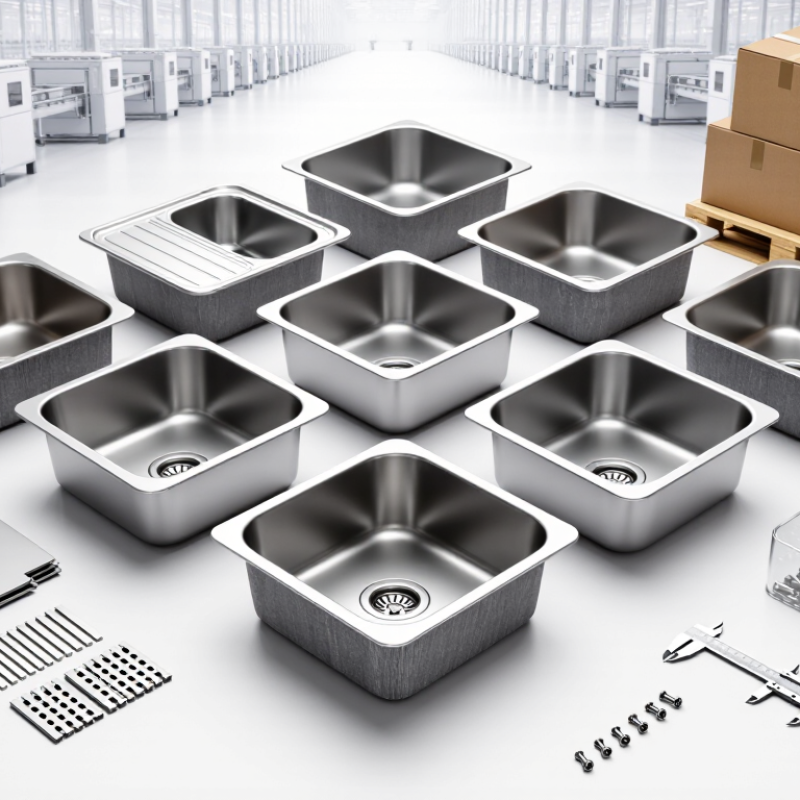
Define Your 304 Stainless Steel Sink Requirements
When sourcing factory-direct 304 stainless steel sinks, define your requirements before requesting quotes. A vague request for “a 304 sink” creates vague prices, samples, and disputes. Record cabinet width, sink length, bowl depth, drain position, mounting style, and order quantity. Include drawings with millimetre dimensions. Small details matter. A 10-millimetre error can spoil an installation.
Specify the material carefully. 304 stainless steel should be confirmed through a material certificate, not a sales description alone. Ask for the steel grade, thickness, surface finish, and welding method. For a busy kitchen, 1.0–1.2 mm steel may provide better rigidity than thinner sheet. However, thicker is not automatically better. Design, support, and forming quality also affect performance. Request a production sample and inspect corners, welds, polishing marks, overflow openings, and sound-deadening pads. I once focused too much on thickness and overlooked a poorly aligned drain. That mistake changed how I review samples.
Define acceptance standards before production begins. State the allowed dimensional tolerance, scratch limit, drain compatibility, packaging method, and inspection stage. Ask whether the factory can provide batch photos, inspection records, and replacement terms for defects. Clarify carton strength if the sinks will travel long distances. A clear checklist supports fair comparisons. It also exposes uncertain answers. Leave room for revision. Your first specification may be incomplete after handling a real sample, especially when installation space, cleaning habits, or local preferences differ.
Identify and Verify Qualified Sink Manufacturers
How to Source Factory Direct Sale 304 Stainless Steel Sinks
Identifying a qualified sink manufacturer requires more than checking catalog photos. A polished showroom can still hide weak production controls. Request the factory’s business registration, facility address, employee count, and export history. Then compare these details with independent records and recent customer references.
Ask for a current material certificate confirming 304 stainless steel. Do not rely on labels alone. A third-party inspector can use a handheld PMI device to verify chromium and nickel content. Check sheet thickness at several points, especially around the bowl and rim. Small differences matter. Request samples before discussing large orders. Examine weld lines, corner finishing, drainage speed, sound-deadening pads, and the underside coating. A good sample should survive careful handling without sharp edges or visible warping.
Visit the production line when possible. Watch how workers cut, press, weld, polish, clean, and pack each sink. Qualified manufacturers should explain their inspection checkpoints and provide consistent records. Ask how they control batch variation and replace defective units. Their answers should be specific, not decorative. Confirm that packaging protects corners during container transport and meets applicable product-safety requirements.
I would also arrange a pre-shipment inspection. It should measure dimensions, surface quality, quantity, and carton markings against an approved sample. No audit is perfect. A supplier may perform well during one visit and poorly later, so regular checks remain necessary. Clear drawings, written tolerances, and honest communication reduce expensive surprises.
Assess Factory Capabilities and Quality Controls
Before buying factory-direct 304 stainless steel sinks, look beyond the showroom sample. Ask how the factory controls each stage, from sheet-metal receipt to final packing. Can staff show incoming material records and trace a sink back to its steel batch? Check certificates, and ask how alloy identity is verified. One document is not the whole story.
Walk the production floor if possible. Observe press forming, corner welding, grinding, and sound-deadening application. Ask how workers check bowl dimensions, drain openings, and rim flatness. A simple gauge at the inspection station can reveal whether measurements are routine or occasional. Also review written procedures for weld inspection, surface finishing, and passivation, where applicable. Request recent inspection records, not only a prepared presentation. Look closely at corners under bright light. Small scratches matter.
A polished sample can still hide weak controls. Ask how defects are recorded, who approves rework, and how recurring issues change production. Check whether the factory tests representative sinks for leakage and packaging strength. If results are unclear, ask for a demonstration. Not every supplier will have perfect records. That deserves a closer conversation, not an automatic rejection. Compare what staff say with what the floor shows; gaps can be easy to miss during a short visit.
Compare Direct-Sale Quotes, Terms, and Lead Times
Factory-direct pricing can look simple, but the lowest number may omit important details. Ask each supplier to quote against the same sink drawing, steel grade, thickness, bowl depth, finish, and accessories. Confirm whether 304 stainless steel is supported by a material certificate, and ask how thickness is measured. Small differences matter. One quote may include a drain assembly; another may price it separately. Compare tooling, sample, packaging, and inspection charges alongside the unit price. Request itemized costs in the same currency and quantity range. That makes comparison less guessy.
Terms deserve equal attention. Check the deposit, balance timing, payment method, and what happens if a sample fails inspection. Clarify whether shipping is quoted to your port or only to the factory gate; those are not equivalent. Ask for the production schedule in writing, including sample approval, fabrication, finishing, and packing. Lead times can shift when orders are customized or materials are unavailable. Get a realistic range, not just a best-case date. If delivery sounds unusually fast, ask what stock or production capacity supports it. Keep records of approved drawings and finish samples. A tidy quote sheet can still hide assumptions, so revisit unclear lines before placing the order.
How to Source Factory Direct Sale 304 Stainless Steel Sinks
Compare anonymized factory-direct RFQ benchmarks by unit quote, minimum order quantity, payment terms, and production lead time. Prices are indicative for standard 304 stainless steel sinks and should be confirmed against the final specification, finish, packaging, and shipping terms.
Approve Samples and Arrange Production and Delivery
Before placing a factory-direct order for 304 stainless steel sinks, approve a physical sample, not only drawings. The International Stainless Steel Forum reported 58.4 million tonnes of stainless steel production in 2023, showing the scale of global supply. Scale, however, does not guarantee consistent sink quality. Check the sample’s steel grade through a mill certificate and, when possible, portable PMI testing. Inspect the basin depth, corner radius, welds, overflow opening, and drain position under strong light. A sample can still mislead.
Record every approved detail in a signed specification sheet. Include steel thickness, surface finish, sound-deadening pads, packaging, carton dimensions, and acceptable tolerance ranges. I usually photograph the sink beside a ruler and mark critical measurements. This feels excessive. It prevents arguments later. The factory should submit a pre-production sample when tooling or polishing methods change. Independent inspection can verify dimensions, surface defects, quantity, and packing before shipment. The inspection report should identify the actual production lot, not a random showroom sample.
Production scheduling needs practical milestones. Confirm raw-material purchasing, welding, polishing, final inspection, and loading dates in writing. Allow time for rework. A rushed correction can damage delivery plans. Use a shipment schedule based on completed cartons, not optimistic factory promises. The UNCTAD Review of Maritime Transport has repeatedly highlighted port congestion and schedule disruption as logistics risks. Therefore, confirm booking windows, carton labels, pallet photos, and export documents before loading. A small mistake in carton markings can create a large receiving problem.